
Help your children build healthy money habits from an early age. Discover 10 simple everyday activities UK families can use to teach financial confidence.
- Emmanuella
Teaching Children About Money Through Everyday Activities | Connecting Stories

One of the greatest gifts we can give children isn’t money, it’s the ability to manage it wisely.
Yet many adults reach their twenties or thirties without ever being taught how to budget, save, plan ahead or make informed financial decisions. Often, it’s not because their parents didn’t care. It’s because money simply wasn’t talked about.
At Connecting Stories, we believe financial education starts long before a child opens their first bank account. It begins in everyday moments, during a trip to the supermarket, while planning a family outing or deciding what to do with birthday money.
The good news is that you don’t need to be a financial expert to raise financially confident children. Small conversations and simple habits can make a lasting difference.
Here are ten practical ways to teach children about money through everyday life.

1. Let Them Help with the Weekly Food Shop
A trip to the supermarket is full of opportunities to talk about money.
As you shop together, involve your child by:
- Comparing prices between different brands.
- Looking for offers and discounts.
- Explaining why you sometimes choose one product over another.
- Talking about sticking to a shopping list.
This helps children understand that making thoughtful spending choices isn’t about buying the cheapest item, it’s about getting the best value for your budget.
2. Encourage Saving for Something They Really Want
Instead of buying every toy or gadget immediately, encourage your child to save towards it.
Whether it’s a football, a book or a new game, saving teaches patience and helps children appreciate the value of working towards a goal.
A clear jar can be especially helpful for younger children, allowing them to see their savings grow over time.

3. Give Pocket Money with Purpose
If you choose to give pocket money, use it as a learning opportunity rather than simply handing over cash.
Encourage children to divide their money into categories such as:
- Spend
- Save
- Share
This simple habit introduces budgeting in an age-appropriate way and helps children understand that money often has multiple purposes.
4. Talk Openly About Needs and Wants
One of the most valuable money lessons is learning the difference between something we need and something we want.
For example:
A school uniform is a need.
A second pair of trendy trainers might be a want.
These conversations help children think critically before making spending decisions and build habits they can carry into adulthood.
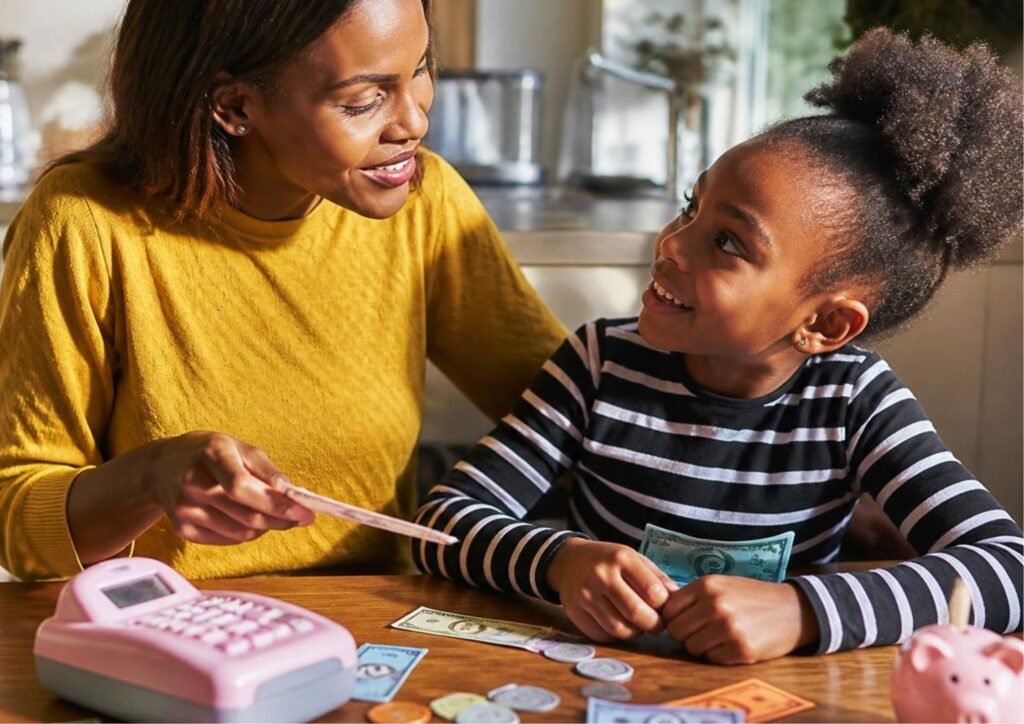
5. Let Them Make Small Financial Decisions
Children gain confidence by practising.
Give them opportunities to choose how they spend a small amount of money.
If they spend it all on sweets and later wish they’d saved some, that’s a valuable lesson in itself.
Experiencing natural consequences in a safe environment helps develop better decision-making over time.
6. Involve Them in Planning Family Activities
If you’re planning a family day out, invite your children to help compare different options.
You might ask:
- Which activity fits our budget?
- How much will travel cost?
- Should we take a picnic instead of buying lunch?
These conversations teach children that budgeting is about making choices—not missing out.

7. Teach That Giving Is Part of Good Money Habits
Money isn’t only about spending and saving.
It’s also about generosity.
Whether it’s donating toys, supporting a local charity or contributing a small amount to a cause they care about, children learn that money can also be used to make a positive difference in the lives of others.
8. Let Them Help in the Kitchen
Cooking together is another surprisingly effective money lesson.
As you prepare meals, talk about:
- Why cooking at home often costs less than eating out.
- How meal planning reduces waste.
- Why using ingredients you already have is a smart financial habit.
These conversations combine life skills with financial awareness.

9. Celebrate Progress, Not Perfection
Children won’t always make perfect money decisions and that’s okay.
The goal isn’t to raise children who never make mistakes.
It’s to raise children who learn from them.
Praise effort, thoughtful choices and growing confidence rather than focusing only on outcomes.
10. Make Money Conversations Normal
Perhaps the most important lesson is this:
Money shouldn’t be a taboo subject.
You don’t need to discuss every financial detail with your children, but allowing age-appropriate conversations about saving, planning and making choices helps remove fear and mystery around money.
The more naturally children hear positive conversations about finances, the more confident they’ll become.

Why These Everyday Lessons Matter
Children don’t learn about money from one big conversation.
They learn through hundreds of small moments.
The conversations you have in the supermarket.
The decisions you make before a family outing.
The way you talk about saving.
The way you respond when something unexpected happens.
These everyday experiences shape how children think about money long before they earn their first pay cheque.
Building Financial Confidence Starts at Home
Schools play an important role in financial education, but some of the most meaningful lessons happen at home.
You don’t need expensive resources or specialist knowledge.
What children need most is consistency, curiosity and opportunities to practise making decisions in a safe environment.
By involving them in everyday financial choices, you’re helping them build confidence, responsibility and resilience—skills that will serve them throughout life.

Final Thoughts
At Connecting Stories, we believe financial empowerment begins with everyday conversations.
When we help children understand money from an early age, we’re not simply teaching them how to spend or save. We’re helping them develop confidence, critical thinking and the ability to make informed choices as they grow.
Every shopping trip, family meal and budgeting conversation is an opportunity to shape healthier financial habits for the next generation.
And perhaps that’s one of the most valuable investments we can ever make.
Looking for more practical resources to support your family’s financial well-being?
At Connecting Stories, we’re committed to empowering women and families with the knowledge, confidence and community they need to thrive.
Explore our latest articles, join our upcoming AI Skills That Open Doors programme or subscribe to our newsletter for more practical guidance on financial well-being, career development and personal growth.
Recommended Reads

7 Low-Cost Ways to Enjoy Summer in London (Without Overspending)
Emmanuella
July 22, 2026